

SEO | AIO

Warren County Tourism Department
How Warren County Tourism Became the Trusted Source for AI-Driven Trip Planning
Client Snapshot
Warren County Tourism Department | Lake George, NY
Warren County Tourism promotes and supports tourism throughout the Lake George Area through VisitLakeGeorge.com, a Simpleview-powered destination marketing website.
The Challenge
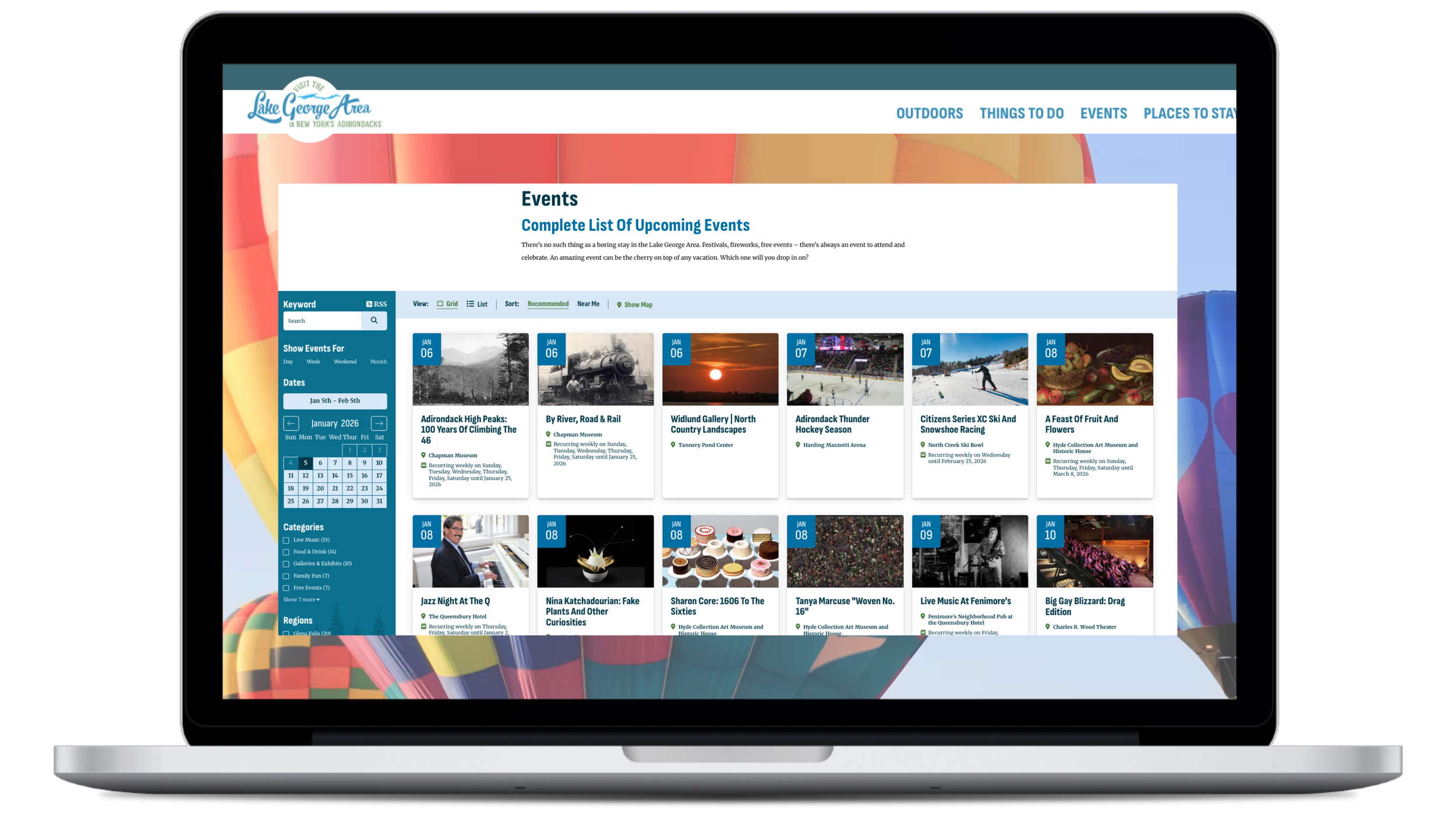
As the official Destination Marketing Organization for the Lake George Area and surrounding Warren County, it is critical that travelers rely on VisitLakeGeorge.com as their primary source of tourism information when planning a visit. The site contains a wealth of resources on lodging, dining, attractions, and activities, and while Warren County Tourism’s KPIs include driving referral traffic to local businesses, area events are often the primary catalyst that brings visitors to the site in the first place.
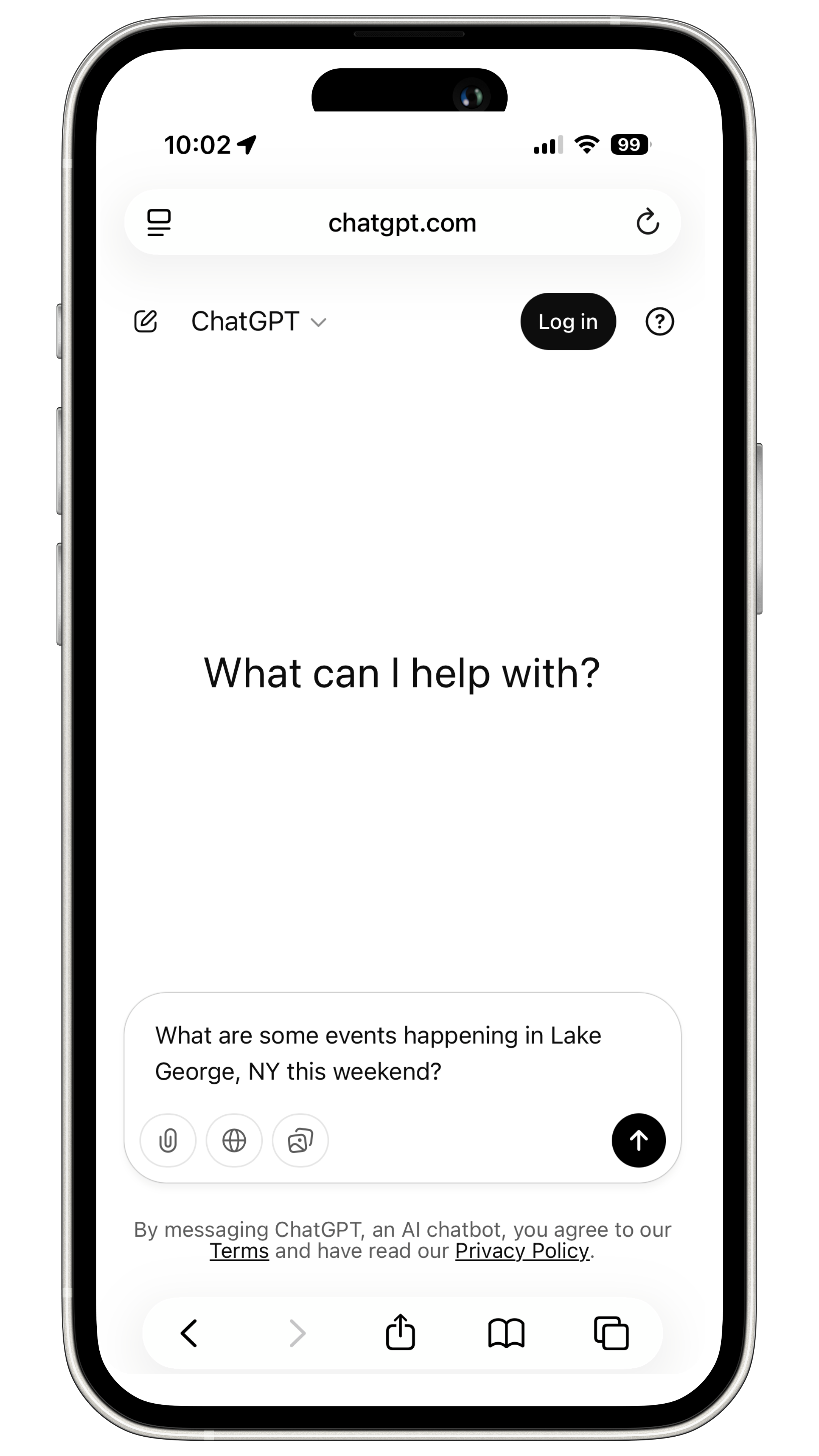
While up-to-date information on area events is available on the Warren County Tourism website—and event pages frequently serve as primary landing pages for prospective visitors—these pages were being discovered less often than they had been prior to the widespread adoption of generative AI tools by trip planners. Because the Lake George Area is a highly competitive tourism destination, many unofficial and third-party sites also vie for visibility. Although Warren County Tourism continued to perform well in traditional search results due to long-term investments in SEO, their event pages were not consistently appearing in AI-generated results, including Google Overviews and ChatGPT responses. Instead, answers were frequently sourced from lower-quality, unofficial websites.
The size and complexity of VisitLakeGeorge.com made this challenge particularly difficult. Like many destination marketing organizations, Warren County Tourism manages a large volume of event content within a CMS-driven, Simpleview-powered website, requiring solutions that could be implemented without custom development or platform-level changes. Many events are submitted by the public and receive only light editorial review before publication. Events are also commonly syndicated across multiple platforms using nearly identical descriptions. In addition, some listings contain minimal on-page detail and direct users to external sites for more information. As a result, VisitLakeGeorge.com’s event listings were not consistently recognized by AI-driven search tools as the most authoritative source for event information.
Rooted Rock Approach
During the initial assessment phase, our team discovered that some recently optimized event pages were already being cited regularly by generative search engines and other AI tools. We began our research by identifying which sections of these pages were being referenced and what characteristics made them distinct from other event listings on the site, with the goal of reproducing tactics that were already proving successful within VisitLakeGeorge.com’s existing content ecosystem.
We also conducted in-depth reviews of major AI platforms to better understand which external sources were being cited and what types of information potential visitors were actively seeking when planning trips. Citations were validated through repeated prompt testing across multiple AI tools, including generative search experiences and conversational AI platforms, and by observing citation consistency over time rather than relying on isolated mentions.
Important Discoveries
Many event pages lacked unique, helpful on-page information, while visitors were frequently searching for details beyond basic event descriptions, such as schedules, pricing, family- or dog-friendly policies, and accessibility considerations.
Searchers showed strong interest in itineraries. While many of the other findings aligned with existing assumptions, this insight was unexpected and would likely not have surfaced without an AI-focused research phase.
Although search interest in itineraries was high, the itineraries that did exist were often outdated and rarely cited by AI tools.
In some cases, AI tools were looking for language that differed from the terminology used on the site—for example, when the commonly searched name of an event or location differed from its official title.
Several pages implied answers to common visitor questions without stating them clearly or directly.
With these insights in hand, we compiled a list of high-priority event pages that demonstrated strong potential for AI citations with relatively minimal optimization. By starting with a small group of pages that were both high-impact and considered “low-hanging fruit,” we were able to implement changes quickly and efficiently, achieving meaningful results with limited effort.
These findings formed the foundation of a repeatable optimization framework that could be applied across additional event pages at scale. In most cases, the optimized pages experienced an immediate increase in AI-driven visibility while also reversing previously declining organic traffic trends. This demonstrated that AI-focused optimizations not only improved performance within generative search tools, but also delivered measurable benefits in traditional organic search results.
Results & Impact
By implementing a targeted AI search optimization framework, Warren County Tourism saw a substantial and measurable increase in how often its event content was surfaced, referenced, and prioritized within AI platform searches for travelers using AI tools to plan trips to the Lake George Area.
Within one to three months of optimization, event pages that received AI optimization enhancements experienced a 167% increase in AI-driven traffic. By comparison, non-optimized pages also benefited from broader AI adoption trends, but grew at a slower rate—just over 112% during the same period. This differential highlights the direct impact of Rooted Rock’s AI optimization efforts, resulting in a 49% performance lift for optimized pages versus the site’s baseline AI traffic growth. In practical terms, this meant that optimized event pages were roughly 25% more likely to be surfaced in AI-generated answers than similar, non-optimized listings.
Beyond visibility, these gains translated into meaningful strategic advantages. Optimized pages demonstrated stronger alignment with traveler intent, enhanced clarity around commonly asked questions, and increased recognition by AI platforms as authoritative and trustworthy sources of event information. Additionally, these improvements did not come at the expense of traditional SEO performance. In many cases, pages that had previously experienced a fluctuation in organic traffic stabilized or rebounded after optimization, demonstrating that AI-focused enhancements can complement, rather than compete with, existing SEO investments.
Overall, these efforts resulted in VisitLakeGeorge.com increasingly replacing less qualified and third-party sources as the cited authority for event-related questions across AI platforms and helped travelers effectively plan their trips to Warren County. This framework now serves as a scalable model for improving AI visibility across additional content types within VisitLakeGeorge.com’s existing Simpleview-based platform.