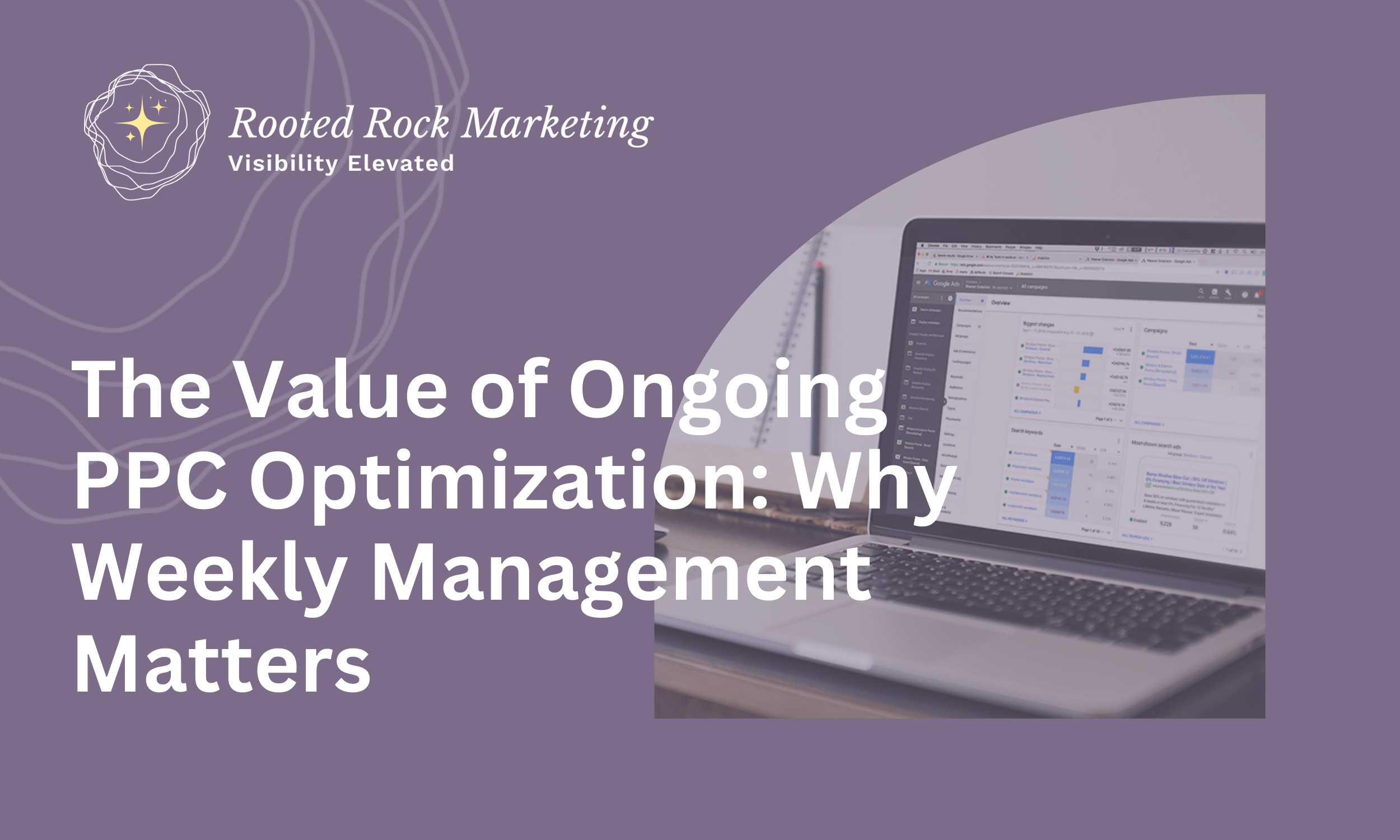
The Value of Ongoing PPC Optimization: Why Weekly Management Matters
Many businesses assume that once a PPC campaign is live, the platforms will handle the rest. But automation without oversight can quietly erode performance, misallocate spend, and limit growth. Ongoing optimization ensures your campaigns adapt, improve, and consistently drive meaningful results.
Busting the “Set It and Forget It” Myth
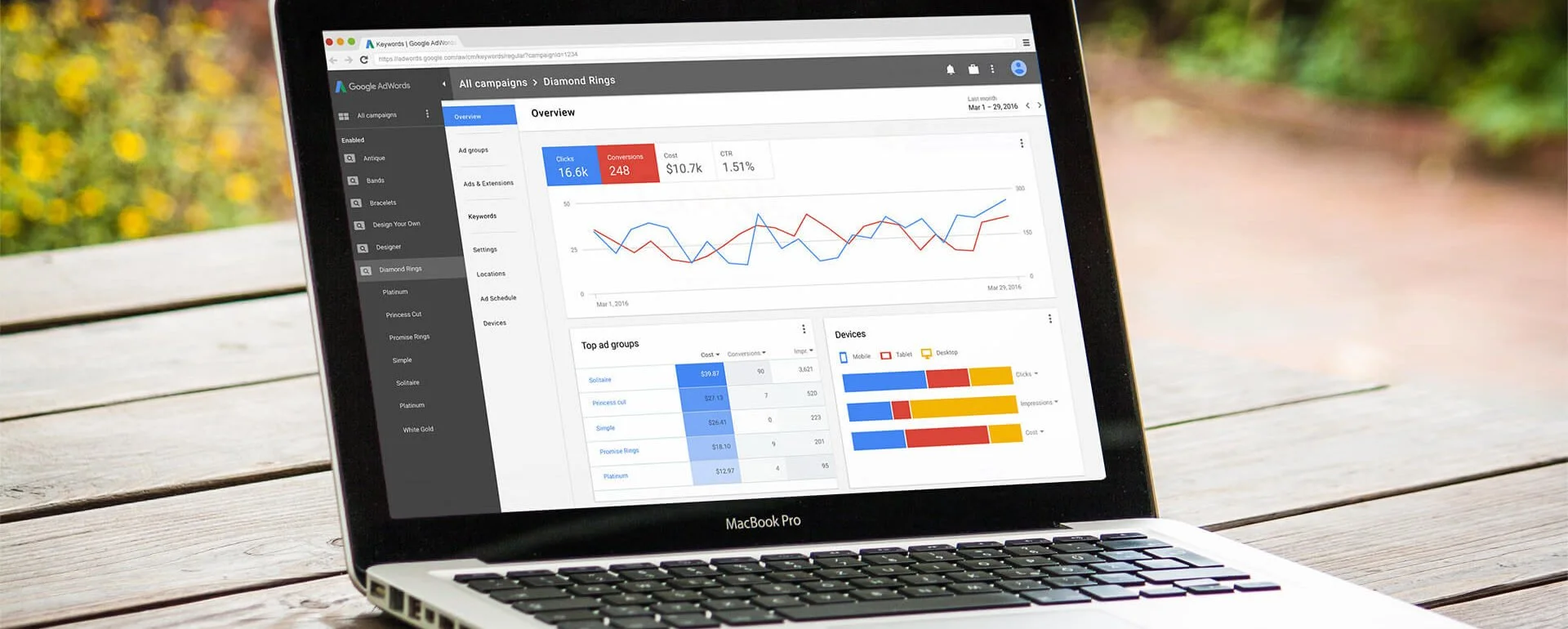
PPC advertising has never been more automated…but that doesn’t mean it runs itself.
AI and platform automation can help, but if left unchecked, even AI-driven campaigns can waste budget, misinterpret goals, or drift away from business priorities.
Why This Matters to Businesses
- More efficient ad spend
- Faster insights into audience behavior
- Better alignment between campaigns and business goals
- Higher conversion rates and improved ROAS
What “Ongoing Optimization” Actually Means
Ongoing optimization is the continuous process of analyzing performance data, identifying trends, and making strategic adjustments to improve results over time. It’s not reactive — it’s proactive. And it applies to every campaign type, not just AI-powered ones.
Whether a campaign uses automated bidding, Performance Max, or fully manual keyword targeting, it exists within a constantly shifting digital landscape.
AI-Driven Campaigns Require Oversight
AI-powered campaigns (like Smart Bidding and Performance Max) are designed to optimize toward the goals you set. But they can only optimize based on:
- The data they receive
- The conversion actions configured
- The audiences available
- The creative assets provided
If conversion tracking is flawed, audiences are too broad, or low-quality conversions aren’t excluded, AI will optimize toward the wrong signals — and scale inefficiency quickly.
Automation accelerates results — good or bad.
That’s why weekly monitoring matters:
- Reviewing search term insights
- Evaluating audience signals
- Checking asset performance
- Confirming tracking accuracy
- Reallocating budgets based on real outcomes
AI is powerful, but it is not strategic on its own. Our team likes to say that we’re professional babysitters for our AI campaigns.
Non-AI Campaigns Are Equally Dynamic
Even campaigns built on manual bidding or traditional keyword structures require constant refinement.
Why?
Because the environment around them changes every week:
- Competitors adjust bids and budgets
- New competitors enter the auction
- Search demand fluctuates
- Cost-per-click trends shift
- Audience behavior evolves
- Ad fatigue sets in
Without monitoring, even the most carefully built campaign can:
- Experience creeping CPC increases
- See declining click-through rates
- Lose impression share
- Shift toward lower-intent queries
- Plateau in conversions
PPC is not static. It is a live auction that resets every time a search happens.
Why Weekly Optimization Matters
Dynamic Signal Environment
Search demand changes weekly. New trends emerge, competitors adjust, audiences shift. Without weekly checks, campaigns fall behind the market.
Automation Needs Human Oversight
AI-driven campaign types (like Performance Max) optimize toward the data they see. If that data is noisy or misaligned with goals, the campaign optimizes the wrong actions.
AI is a tool, not a replacement for strategic thinking.
ROI Doesn’t Increase on Its Own
Without optimization, cost inefficiencies compound over time, cannibalizing budget with underperforming clicks.
Real Campaign Optimization in Action
When running ads for one of our clients, Visit Vancouver Washington, our goal was to increase awareness and visitation by targeting travelers from key U.S. markets with a non-stop flight campaign. A targeted Google Ads campaign with tailored creatives and strategic geographic segmentation helped us get there, along with weekly ongoing refinement and management.
Key Results
Conversion Rate: Increased from 653% to 777% (124 point increase)
Click-Through Rate (CTR): +143%
Cost Per Click (CPC): Dropped by 50%
Return on Ad Spend (ROAS): Improved 20x — from $7.32 to $151.19 per $1 spent
Overall Engagement:
Active Users +47%
New Users +47%
Engaged Sessions +50%
Total Events +39%
Why These Numbers Matter
Higher conversions reflect smarter audience targeting and message refinement.
Lower CPC signals more efficient use of budget.
Big ROAS gains show that optimization prioritizes profit, not just clicks.
How Optimization Drives These Outcomes
Root Causes of Improved Performance
- Tailored messaging based on performance signals
- Geographic audience fine-tuning
- Ad creative refreshes based on engagement trends
- Smart budget shifts toward high ROI segments
Essentially: Weekly adjustments amplified what was working and cut what wasn’t.
The Cost of Not Optimizing
What Happens Without Optimization
- Campaigns plateau or decline
- Budgets leak into low-quality clicks
- AI misallocates spend
- Competitors outperform you
This is where the illusion of automation breaks. Campaigns left alone do less over time.
How Rooted Rock Approaches Optimization
At Rooted Rock, we blend data, strategy, and technology to work together, not just rely on automation dashboards.
Our optimization framework includes:
- Weekly performance reviews
- Cross-platform insights
- Strategic bid & audience recalibrations
- Creative testing and refinement
- Transparent reporting
This is why clients see measurable improvements, not just activity reports.
Optimization Is Where Performance Is Won
PPC success isn’t determined the day a campaign launches; it’s shaped in the weeks and months that follow.
In today’s advertising landscape, automation can accelerate results, but it cannot replace strategic oversight and human-led decision-making. Competitors adjust bids. Search behavior shifts. Creative fatigue sets in. AI models learn from the signals they’re given. Without consistent review and refinement, even well-built campaigns can slowly drift off course.
Ongoing optimization is what keeps campaigns aligned with real business goals. It protects budget. It identifies growth opportunities. It turns performance data into an actionable strategy.
Our team does not believe in “set it and forget it.” We believe in active management, weekly performance reviews, and data-driven decision making that moves campaigns forward, not just keeps them running.
If you’re investing in paid media, your campaigns should be evolving just as quickly as the platforms themselves.