Google Ad Grants vs. Google Ads: What Nonprofits Need to Know (and When to Use Both)
For nonprofit organizations looking to grow awareness, drive engagement, and increase impact, Google offers two powerful advertising options: Google Ad Grants and Google Ads.
At first glance, they may seem similar; they both place your organization in Google search results. But in reality, they function very differently and serve distinct roles in your marketing strategy.
Understanding how each works and when to use them together can make the difference between underutilizing your marketing potential and building a scalable, high-performing acquisition system.
What Is Google Ad Grants?
Google Ad Grants is a program that provides eligible nonprofits with up to $10,000 per month in Google Search advertising.
These ads appear when users search for keywords related to your mission, programs, or services—allowing you to reach people at the exact moment they’re looking for what you offer.
Unlike traditional advertising:
You don’t pay for clicks
Your ads are text-based search ads only
You must follow strict compliance and performance rules
When used effectively, Google Ad Grants can help nonprofits:
Increase awareness of their mission
Drive qualified website traffic
Grow donations, volunteers, and program participation
What Is Google Ads?
Google Ads is Google’s paid advertising platform where businesses (including nonprofits) pay for ad placements across:
Search
Display (banner ads)
YouTube (video ads)
Shopping and Performance Max campaigns
Unlike Ad Grants:
You control your budget and bidding
You can run multiple campaign types
You’re competing fully in the ad auction (not in a secondary placement)
This makes Google Ads far more flexible, but also requires financial investment.
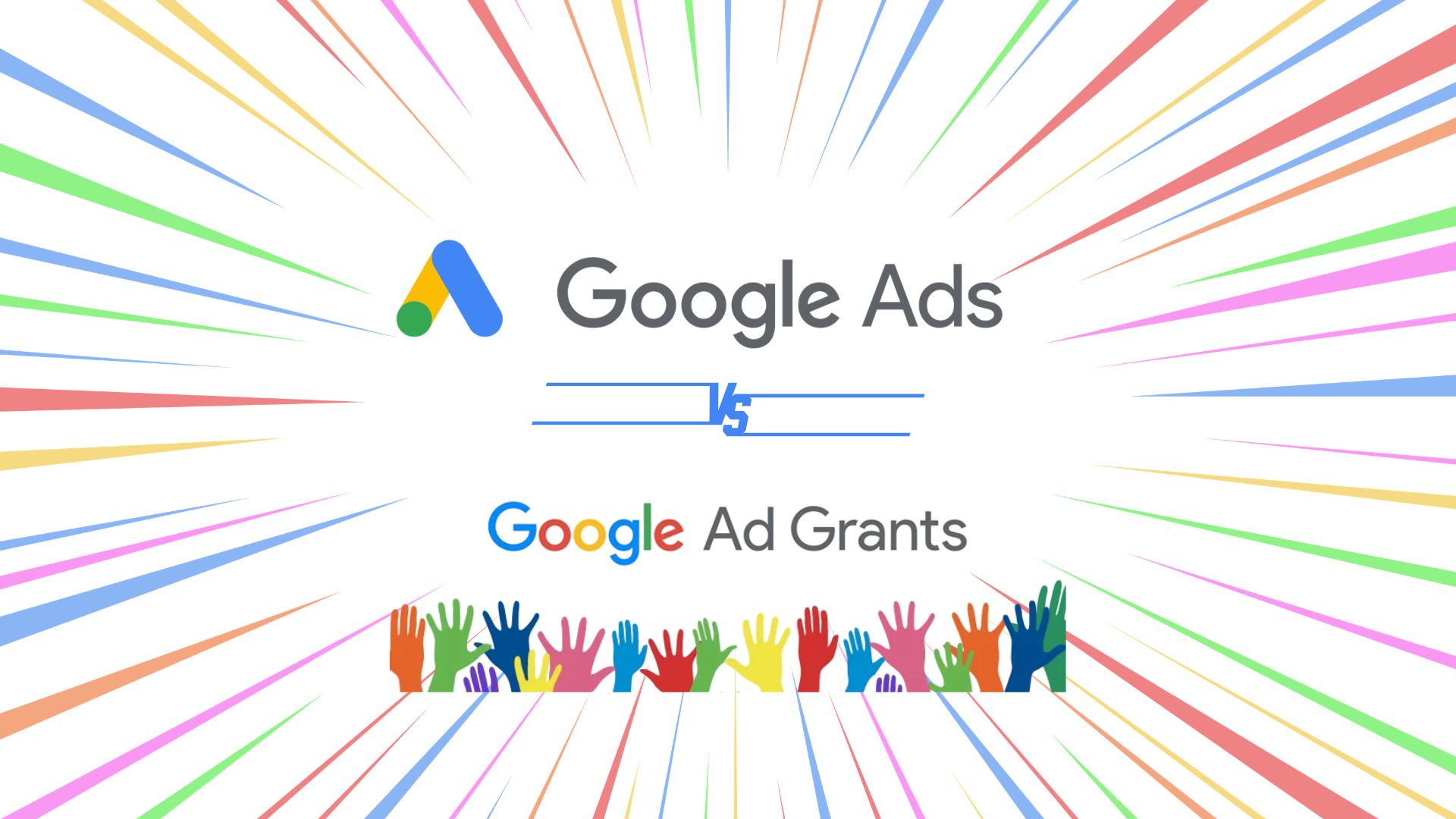
Key Differences Between Google Ad Grants and Google Ads
Here’s how they compare at a high level:
Ad Spend
Ad Grants: Eligible non-profits are granted up to $10,000/month in ad credit - Google Ads: Fully flexible (no minimums or maximums). Charged on a pay-per-click basis.
2. Management Investment
- Ad Grants: High. Due to the strict policies to retain the grant, a much higher level of time investment is necessary within the campaign. Additionally, the most successful campaigns utilize specialized and/or advanced configurations.
- Google Ads: Moderate. While you can let Google Ads run on autopilot, doing so is a fast way to waste your budget. To truly see a return on your investment, you should actively manage your paid campaigns no less than once a week.
3. Ad Types
- Ad Grants: Search ads only (text-based)
- Google Ads: Search, Display, Video, Shopping, and more
4. Competition & Visibility
- Ad Grants: Ads appear in a secondary auction, often below paid ads
- Google Ads: Full access to premium placements
5. Restrictions
Ad Grants:
- 5% minimum CTR required
- No single-word keywords
- Strict account structure rules
- Ongoing compliance required
Google Ads:
- No minimum CTR requirement or risk of account suspension for performance issues
- Full keyword flexibility, including single-word and highly competitive terms
- No restrictions on account structure—campaigns can be organized however best fits your strategy
- Ability to use advanced bidding strategies (e.g., Target CPA, Max Conversions) without limitations
- Access to all campaign types (Search, Display, YouTube, Performance Max, etc.)
- No policy-driven pressure to maintain ongoing compliance in the same way as Ad Grants
6. Budget Flexibility
- Ad Grants: “Use-it-or-lose-it” daily budget (~$329/day)
- Google Ads: Spend as much or as little as you want, with the ability to change it as often as you’d like.
When Google Ad Grants Makes the Most Sense
Google Ad Grants is ideal when your goal is to:
Capture high-intent search traffic related to your mission
Promote free resources, programs, or services
Drive donations, volunteer signups, or event registrations
Build long-term awareness without increasing spend
It’s especially powerful for organizations with strong educational or service-based offerings that align with search behavior.
When Google Ads Is the Better Choice
Google Ads becomes essential when you need to:
Compete for highly competitive keywords
Run display or video campaigns (not available in Ad Grants)
Promote time-sensitive campaigns with guaranteed visibility
Scale beyond the limitations of Ad Grants
If your organization is trying to aggressively grow or enter competitive spaces, relying solely on Ad Grants can limit your reach.
When to Use Google Ad Grants + Google Ads Together
This is where most nonprofits leave opportunity on the table.
Using both platforms together allows you to build a full-funnel strategy—leveraging free traffic while strategically investing where it matters most.
Here are the key scenarios where running both makes sense:
1. Highly Competitive Keywords
Ad Grants accounts often struggle to show for competitive, high-value keywords because:
- They operate in a secondary auction
- They have bidding limitations
Solution: Use Google Ads (paid) to compete for those high-value terms, while using Ad Grants for longer-tail, mission-aligned keywords.
2. Grant Policy Limitations
Ad Grants has strict rules around:
- Keyword selection (no overly generic terms)
- Website content and compliance
- Ad structure and performance requirements
This can limit certain campaigns.
Solution:
Use Google Ads to run campaigns that don’t fit within Ad Grant policies, while keeping your grant account compliant and stable.
3. Full-Funnel Marketing Strategy
Ad Grants is strongest at capturing existing demand (people already searching).
Google Ads allows you to:
- Create awareness through display ads
- Use video storytelling on YouTube
- Retarget past website visitors
Together, they create a system:
Ad Grants = intent-based acquisition
Google Ads = awareness + retargeting + scale
4. Budget Utilization Gaps
Many nonprofits don’t fully spend their $10K/month grant due to:
Limited search volume
Poor account structure
Compliance issues
Solution: Even if your Ad Grant isn’t fully utilized, Google Ads can help you scale beyond its limitations and ensure you’re not leaving growth on the table.
The Bottom Line
Google Ad Grants and Google Ads are not competitors, they are complementary tools.
Ad Grants gives you a powerful foundation of free, intent-driven traffic
Google Ads gives you flexibility, scale, and access to broader audiences
The most effective nonprofit marketing strategies use both, intentionally.
How to Get the Most Out of Google Ad Grants
While the grant offers up to $120,000 per year in “free” advertising, many organizations struggle to fully utilize it—or lose it due to compliance issues.
Success with Ad Grants requires:
Strategic campaign structure
Ongoing optimization
Strict compliance with Google’s policies
Strong conversion tracking and reporting
Need Help Managing Your Google Ad Grant?
At Rooted Rock Marketing, we help nonprofits turn their Ad Grant into a high-performing, revenue-driving channel.
From eligibility and setup to ongoing optimization and compliance, we treat your Ad Grant like the six-figure marketing asset it is.
Contact us today to learn how we can help you maximize your impact.